
Lemon Blueberry Bread with Streusel and Glaze is a celebration of summer’s brightest flavors wrapped in a tender, buttery crumb. The bright citrus tang of fresh lemon zest balances the natural sweetness of plump blueberries, while a buttery streusel adds a satisfying crunch, and a thin lemon‑sugar glaze crowns the loaf with a glossy finish. Originating from classic American quick breads that date back to the early 20th century, this recipe modernizes the tradition by layering textures and flavors that keep the palate intrigued from the first bite to the last crumb. Whether you’re looking for a breakfast treat, an afternoon tea companion, or a dessert that feels light yet indulgent, this loaf delivers on every front.
I first discovered this recipe on a breezy weekend at my grandparents’ farmhouse, where the scent of lemon and blueberries drifting from the kitchen signaled that something special was about to happen. It quickly became a staple for our family gatherings, especially when paired with a cup of Earl Grey or a glass of chilled sparkling water. The flavor profile is a harmonious blend of bright, floral lemon, juicy bursts of blueberry, and the warm, caramelized notes from the streusel, all rounded out by a subtle sweetness from the glaze. Serve it warm from the oven for maximum aroma, or let it cool to room temperature for a perfect texture that holds its shape when sliced. This bread is not just food; it’s a memory‑maker that invites you to pause, savor, and share.

A golden‑brown loaf topped with a lemon‑sugar glaze, streusel crumble, and speckles of fresh blueberries.
Quick Overview
Difficulty: Easy
Best for: Brunches, weekend teas, picnics, holiday breakfasts
Taste profile: Bright citrus, sweet‑tart berries, buttery crunch
Diet info: Vegetarian; can be made gluten‑free with a 1:1 flour swap
Why This Recipe Works
The backbone of this loaf is a classic chemical leavening system: baking powder provides a reliable rise, while the acidity of lemon juice reacts with the baking soda in the streusel to create tiny air pockets that keep the crumb light and airy. By folding the blueberries gently into the batter at the very end, we protect their delicate skins from breaking, preserving their burst of juice and preventing the batter from turning a mottled purple. The streusel, a mixture of flour, butter, brown sugar, and a pinch of cinnamon, is baked on top of the loaf, creating a caramelized crust that adds both flavor depth and textural contrast. Finally, the glaze—simple powdered sugar dissolved in lemon juice—seeps into the surface, sealing in moisture and delivering a glossy finish that makes the loaf look as good as it tastes.
Choosing fresh, organic lemons ensures a fragrant zest that penetrates the batter, while high‑quality frozen blueberries (thawed and drained) give the same burst of flavor without the seasonal limitation. The butter in the streusel is kept cold until it meets the flour and sugar, allowing the formation of tiny butter flakes that melt during baking, creating that coveted crunchy topping. This version improves on standard quick‑bread recipes by balancing moisture, sweetness, and acidity, resulting in a loaf that stays tender for days and never becomes soggy, even after the glaze is applied.
- Benefit 1: Moist, tender crumb that stays fresh for up to a week.
- Benefit 2: Contrasting textures—soft interior, crunchy streusel.
- Benefit 3: Bright, balanced flavor profile that appeals to all ages.
- Benefit 4: Simple pantry ingredients; no specialty equipment required.
- Benefit 5: Versatile base for seasonal variations (e.g., raspberries, orange zest).
Ingredients
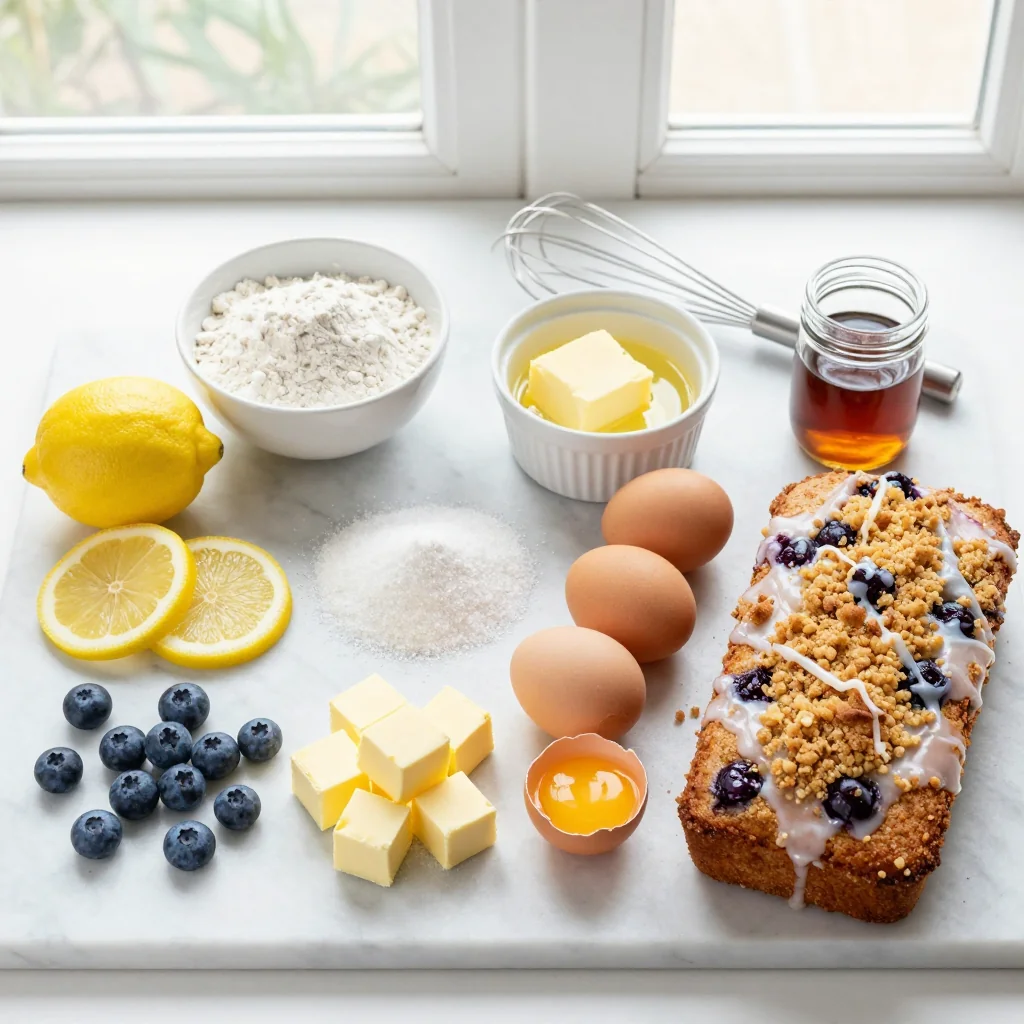
Main Ingredients
- 2 ½ cups (310 g) all‑purpose flour
- 1 ½ teaspoons baking powder
- ½ teaspoon baking soda
- ¼ teaspoon fine sea salt
- ½ cup (115 g) unsalted butter, softened
- 1 cup (200 g) granulated sugar
- 2 large eggs, room temperature
- ¼ cup (60 ml) fresh lemon juice
- Zest of 2 large lemons (about 2 tablespoons)
- ½ cup (120 ml) whole‑milk yogurt
- 1 cup (150 g) fresh or frozen blueberries, rinsed and patted dry
- Optional: 1 tablespoon poppy seeds for visual contrast
For the Streusel & Glaze
- ¼ cup (30 g) all‑purpose flour
- ¼ cup (50 g) packed light brown sugar
- ¼ cup (55 g) cold unsalted butter, cut into small cubes
- ½ teaspoon ground cinnamon
- Pinch of kosher salt
- For the glaze: 1 cup (120 g) powdered sugar
- 2 tablespoons fresh lemon juice (adjust for desired thickness)
Ingredient Notes & Substitutions
When selecting lemons, look for fruits with bright, unblemished skins; the zest contains essential oils that deliver the characteristic citrus aroma. For the blueberries, if using frozen berries, spread them on a paper towel and allow excess moisture to evaporate—this prevents the batter from turning soggy. High‑quality unsalted butter is crucial for a tender crumb and a crisp streusel; avoid margarine or low‑fat spreads as they alter both flavor and texture.
To accommodate dietary needs, substitute the all‑purpose flour with a gluten‑free blend that contains xanthan gum for structure. For a dairy‑free version, use a plant‑based butter (such as a solid coconut oil spread) and swap the yogurt for coconut‑milk yogurt; the flavor will shift slightly but remain delicious. If you need a lower‑sugar option, reduce the granulated sugar by ¼ cup and increase the lemon zest for added brightness, or replace half the brown sugar in the streusel with a natural sweetener like maple sugar.
Equipment Needed
- 9 × 5‑inch (23 × 13 cm) loaf pan
- Electric stand mixer or hand mixer
- Medium mixing bowls (2)
- Rubber spatula
- Zester or microplane
- Fine-mesh sieve (optional, for flour)
- Cooling rack
- Small saucepan (for glaze)
Step-by-Step Instructions
Step 1: Prepare the Pan and Oven
Preheat your oven to 175 °C (350 °F). Grease the loaf pan lightly with butter or non‑stick spray, then line the bottom with parchment paper for easy removal. This ensures the loaf releases cleanly and retains its shape after baking.
Step 2: Mix Dry Ingredients
In a medium bowl, whisk together the flour, baking powder, baking soda, and salt. Whisking aerates the mixture, guaranteeing an even distribution of leavening agents, which is essential for a uniform rise.
Step 3: Cream Butter and Sugar
Using a stand mixer on medium speed, cream the softened butter with granulated sugar for 3–4 minutes, until the mixture is pale, fluffy, and has a light ribbon when the beaters are lifted. This process incorporates air, creating a light crumb.
Step 4: Incorporate Eggs and Lemon
Add the eggs one at a time, beating well after each addition. Then stir in the fresh lemon juice and zest, allowing the citrus oils to blend fully with the butter‑sugar base. The batter should become glossy and slightly thickened.
Step 5: Add Yogurt and Dry Mix
Fold in the yogurt with a rubber spatula, then gently stir in the dry flour mixture until just combined. Over‑mixing at this stage can develop gluten, leading to a dense loaf, so stop as soon as no streaks of flour remain.
Step 6: Fold in Blueberries
Carefully fold the blueberries (and poppy seeds, if using) into the batter, turning the mixture over a few times. The berries should be evenly dispersed without the batter turning purple, which indicates they’re breaking.
Step 7: Prepare the Streusel
In a small bowl, combine flour, brown sugar, cinnamon, and a pinch of salt. Cut the cold butter into the mixture using a pastry cutter or fingertips until it resembles coarse crumbs with pea‑size butter pieces. Set aside; the butter will melt during baking, forming a crunchy topping.
Step 8: Assemble the Loaf
Pour the batter into the prepared loaf pan, smoothing the top with a spatula. Sprinkle the streusel evenly over the surface, pressing lightly so it adheres. This creates a caramelized crust as the butter melts.
Step 9: Bake
Place the pan in the preheated oven and bake for 45–55 minutes, or until a toothpick inserted into the center comes out clean and the top is a deep golden brown. If the top darkens too quickly, tent it loosely with foil.
Step 10: Glaze While Warm
While the bread rests for 10 minutes in the pan, whisk together powdered sugar and lemon juice in a small bowl until smooth. Drizzle the glaze over the warm loaf, allowing it to soak slightly into the crust for a glossy finish.
Step 11: Cool Completely
Transfer the loaf to a cooling rack and let it cool completely (about 1 hour). This step sets the crumb, prevents it from becoming gummy, and allows the glaze to fully set.
Step 12: Slice and Serve
Using a serrated knife, slice the bread about 1‑inch thick. Serve plain, with a dollop of whipped cream, or alongside a scoop of vanilla ice cream for an indulgent treat.
Expert Tips for Perfect Results
Tip 1: Use Room‑Temperature Eggs
Room‑temperature eggs blend more easily with butter and sugar, creating a smoother batter that traps air for a lighter crumb.
Tip 2: Pat Blueberries Dry
Excess moisture from berries can make the batter soggy. After rinsing, spread them on a kitchen towel and gently pat dry before folding them in.
Tip 3: Chill the Streusel
Keeping the streusel cold until it hits the oven ensures the butter stays in solid pieces, which melt slowly and create a crunchy, caramelized topping.
Tip 4: Adjust Glaze Consistency
If the glaze is too thick, add a few drops of lemon juice; if too runny, whisk in additional powdered sugar until the desired drape is achieved.
Tip 5: Use a Lightly Greased Parchment Liner
Line the loaf pan with parchment paper trimmed to the pan’s shape. This not only helps release the bread cleanly but also retains moisture, preventing a dry crust.
Tip 6: Store in an Airtight Container
Once cooled, wrap the loaf tightly in plastic wrap or place it in a sealed container. This keeps the crumb tender and the glaze from drying out.
Common Mistakes to Avoid
Over‑mixing the batter: This develops gluten, resulting in a dense, rubbery loaf. Mix just until ingredients are combined.
Using frozen berries without draining: Excess water makes the batter soggy and the crumb gummy. Always pat berries dry.
Skipping the glaze: The glaze adds moisture and a bright finish; without it, the loaf can feel flat.
Opening the oven too early: The sudden temperature drop can cause the loaf to collapse. Wait until the minimum baking time has passed before checking.
Not allowing the loaf to cool completely: Cutting while warm creates a crumb that smears and loses its structure. Patience yields cleaner slices.
Recipe Variations
Raspberry‑Lime Bread
Swap the blueberries for fresh raspberries and replace lemon zest with lime zest. The tart lime complements the sweet raspberries, offering a tropical twist.
Orange‑Cranberry Walnut Bread
Use orange zest and dried cranberries, and fold in toasted walnut pieces. The nutty crunch pairs beautifully with the citrusy orange flavor.
Chocolate‑Chip Lemon Bread
Add ½ cup dark chocolate chips to the batter and reduce the blueberries by half. The bittersweet chocolate balances the bright lemon notes.
Vegan Coconut‑Lemon Bread
Replace butter with coconut oil, use a flax‑egg substitute (1 tbsp ground flaxseed + 3 tbsp water per egg), and swap yogurt for soy or almond yogurt. The coconut oil adds a subtle tropical aroma.
How to Serve
This lemon blueberry bread shines when served warm with a pat of unsalted butter that melts into the crumb, creating a luxurious mouthfeel. Pair it with a cup of Earl Grey tea, a glass of chilled rosé, or a sparkling lemonade for a brunch spread that feels both elegant and comforting. For a dessert presentation, top each slice with a dollop of lightly sweetened mascarpone or vanilla bean ice cream, and sprinkle a few fresh blueberries on top for color.
For a more festive tableau, arrange slices on a wooden board, drizzle extra glaze in a decorative zig‑zag, and garnish with lemon zest curls and a sprig of fresh mint. This visual contrast of bright yellow glaze against the deep violet of blueberries makes the loaf a centerpiece at holiday tables, picnics, or casual coffee gatherings.
Storage & Reheating
Refrigerator Storage
Wrap the cooled loaf tightly in plastic wrap or store it in an airtight container. It will stay fresh for up to 5 days, retaining its moisture and flavor.
Freezing Instructions
Slice the bread first, then place a layer of parchment between slices. Freeze in a zip‑top bag for up to 3 months. To thaw, leave at room temperature for 30 minutes or microwave a slice for 15‑20 seconds.
Reheating
Warm individual slices in a toaster oven at 180 °C (350 °F) for 5 minutes, or microwave a slice covered with a damp paper towel for 20‑30 seconds to restore softness without drying out the glaze.
Frequently Asked Questions
Final Thoughts
Lemon Blueberry Bread with Streusel and Glaze brings together the best of classic comfort food and bright, seasonal flavors in a single, elegant loaf. Its simple technique, adaptable ingredients, and stunning visual appeal make it a go‑to recipe for both novice bakers and seasoned pastry chefs seeking a reliable crowd‑pleaser.
Give this recipe a try, experiment with the suggested variations, and share your results in the comments below. Your feedback helps us refine each step, and we love seeing how you make this bread your own.
Lemon Blueberry Bread with Streusel and Glaze
A bright, buttery loaf packed with blueberries, lemon zest, and a crunchy streusel topping.
Ingredients
- 2 ½ cups all‑purpose flour
- 1 ½ tsp baking powder
- ½ tsp baking soda
- ¼ tsp sea salt
- ½ cup unsalted butter, softened
- 1 cup granulated sugar
- 2 large eggs
- ¼ cup fresh lemon juice
- Zest of 2 lemons
- ½ cup whole‑milk yogurt
- 1 cup blueberries
- ¼ cup flour (streusel)
- ¼ cup brown sugar
- ¼ cup cold butter (streusel)
- ½ tsp cinnamon
- Pinch salt
- 1 cup powdered sugar (glaze)
- 2 tbsp lemon juice (glaze)
Instructions
- Preheat oven to 175 °C (350 °F) and prepare a 9×5‑inch loaf pan.
- Whisk together flour, baking powder, baking soda, and salt.
- Cream butter and sugar until light and fluffy.
- Add eggs, lemon juice, and zest; mix well.
- Fold in yogurt, then the dry ingredients.
- Gently fold in blueberries.
- Prepare streusel by cutting cold butter into flour, sugar, and cinnamon.
- Transfer batter to pan, top with streusel, and bake 45–55 min.
- Drizzle lemon glaze over warm loaf; cool completely.
- Slice and enjoy!
Chef's Notes
- For extra lemon zing, add a teaspoon of lemon extract to the batter.
- Do not over‑mix after adding flour; stop as soon as the batter is smooth.