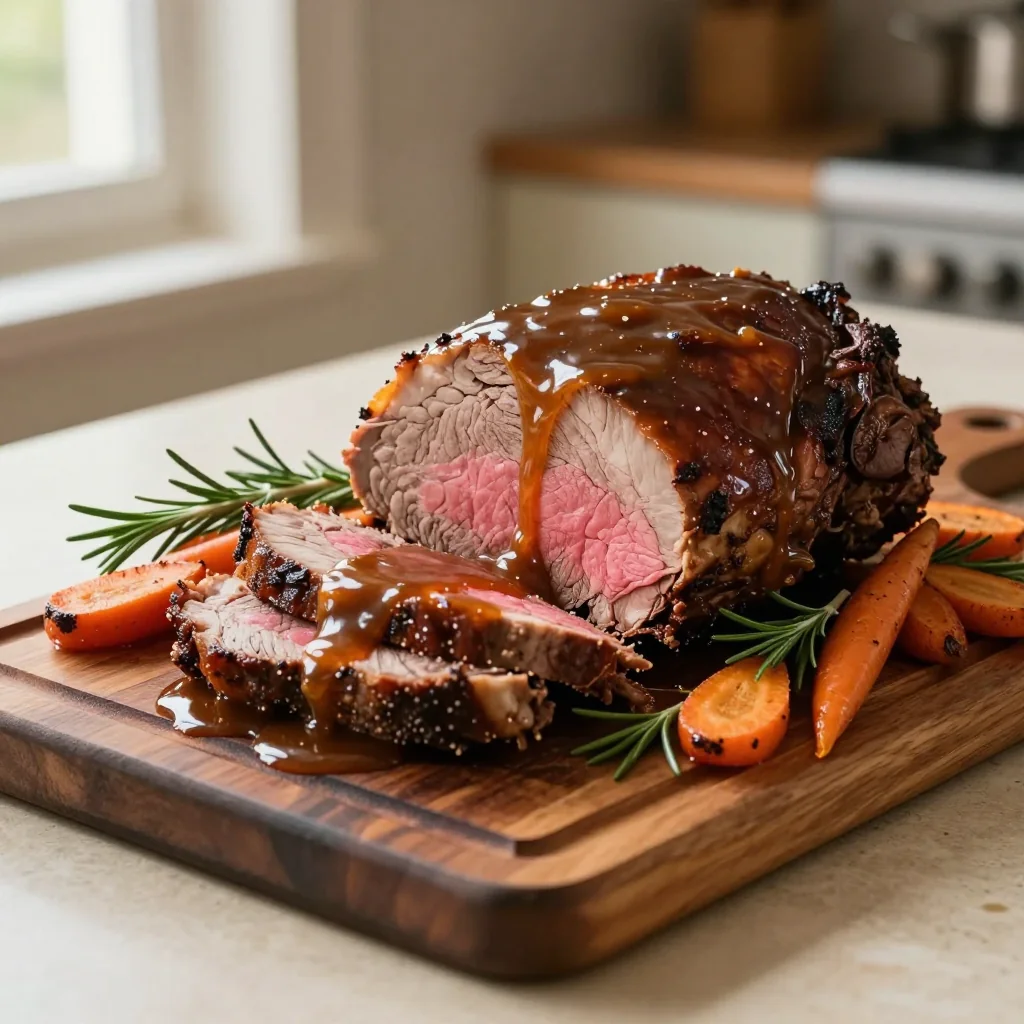
There is something timeless about a perfectly roasted beef joint bathed in a glossy, savory gravy and surrounded by sweet, tender carrots. This dish traces its roots back to classic British Sunday roasts, where families would gather around a hearty slab of meat that had been slow‑cooked to melt‑in‑your‑mouth tenderness. Over the decades the recipe has travelled across continents, picking up subtle regional twists while still retaining the core principles of caramelized crust, deep‑flavored jus, and vegetables that absorb every drop of goodness. What makes this particular Beef Roast with Gravy and Carrots stand out is the deliberate layering of flavors— a rub of aromatic herbs, a splash of red wine that deglazes the pan, and a finish of butter‑enriched gravy that clings to each slice. The result is a dish that feels both indulgent and comforting, perfect for celebrations or a cozy weekend dinner.
I first fell in love with this roast on a rainy autumn evening, when the kitchen was filled with the scent of sizzling beef and the sweet perfume of carrots turning golden. It quickly became my go‑to centerpiece for holiday tables, because the flavor profile—rich umami from the meat, bright acidity from the wine, and earthy sweetness from the carrots—offers a balanced harmony that pleases every palate. Serve it hot, sliced thick, with the gravy ladled over the top, and you’ll hear the satisfied sighs of guests as they cut through the juicy meat and savor the silky sauce. Pair it with buttery mashed potatoes or a crisp green salad, and you’ve got a complete, restaurant‑quality experience without ever leaving home. Whether you’re feeding a crowd or enjoying a quiet dinner for two, this roast promises a memorable, comforting feast every time.
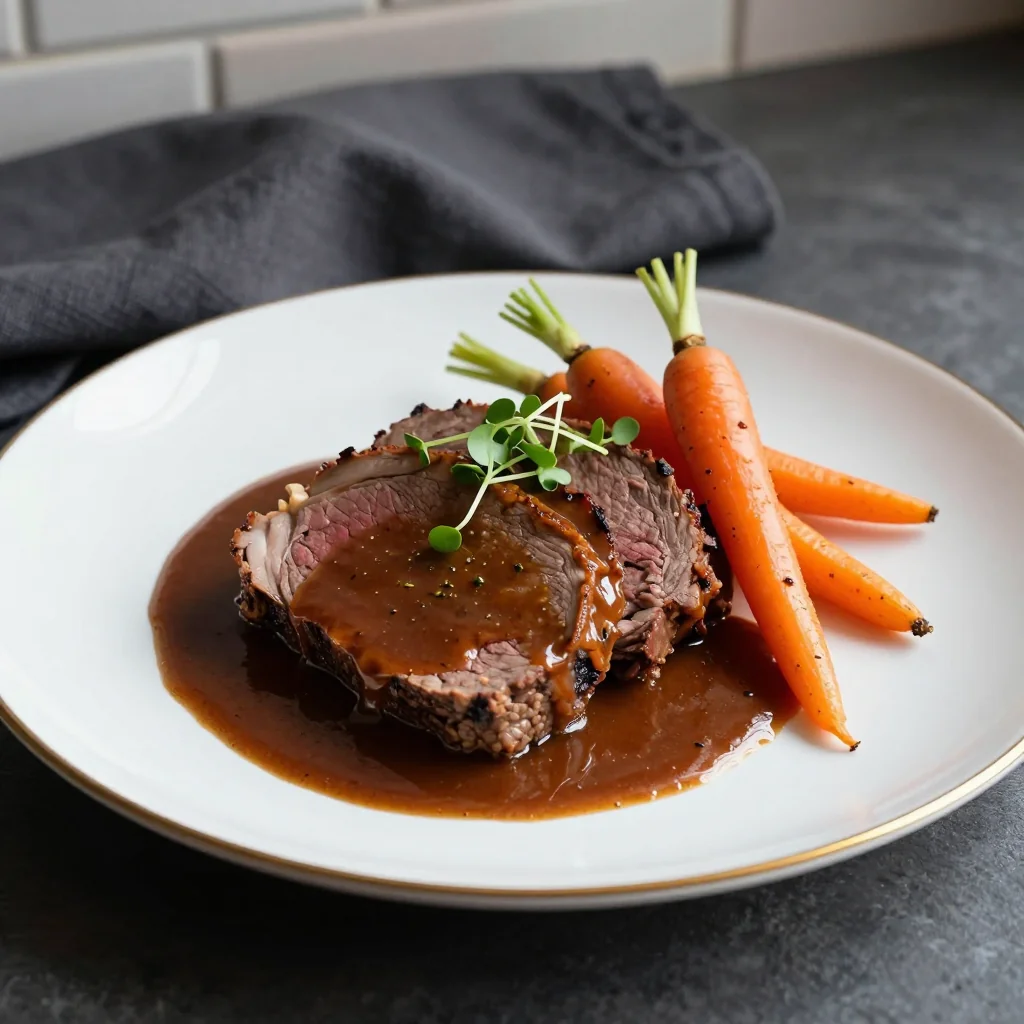
A golden‑brown beef roast resting on a bed of caramelized carrots, smothered in glossy gravy.
Quick Overview
Difficulty: Medium
Best for: Sunday family dinner, holiday gatherings, special occasions
Taste profile: Savory, umami‑rich beef with sweet‑caramel carrots and a velvety, herb‑infused gravy
Diet info: Gluten‑free if thickened with cornstarch; can be made dairy‑free by omitting butter
Why This Recipe Works
The secret to a tender, juicy roast lies in the science of collagen breakdown. By cooking the beef at a moderate temperature (around 150 °C/300 °F) for an extended period, the tough connective tissue slowly converts into gelatin, which coats the meat fibers and keeps the roast moist. Simultaneously, searing the beef first creates a Maillard crust that locks in juices and adds a deep, nutty flavor that cannot be achieved through low‑and‑slow cooking alone. The carrots, added midway through the roasting process, benefit from the same heat, allowing their natural sugars to caramelize while they absorb the savory juices, creating a harmonious sweet‑savory balance.
Each ingredient is chosen for a purpose: the beef chuck provides abundant marbling for flavor; fresh thyme and rosemary contribute aromatic notes that brighten the richness; red wine not only deglazes the pan but also introduces acidity that cuts through the fat, preventing the dish from feeling heavy. The final gravy is thickened with a roux made from butter and flour, which gives it a silky mouthfeel and a glossy sheen that clings to the meat and vegetables. Compared to a basic roast, this version layers flavor at every stage, resulting in a depth that feels both rustic and refined.
- Benefit 1: Collagen conversion yields melt‑in‑the‑mouth tenderness.
- Benefit 2: Maillard sear locks in juices and adds complex flavor.
- Benefit 3: Wine deglaze introduces bright acidity, balancing richness.
- Benefit 4: Carrots absorb savory juices, becoming sweet and buttery.
- Benefit 5: Herb‑infused gravy provides a silky finish that unifies the plate.
Ingredients
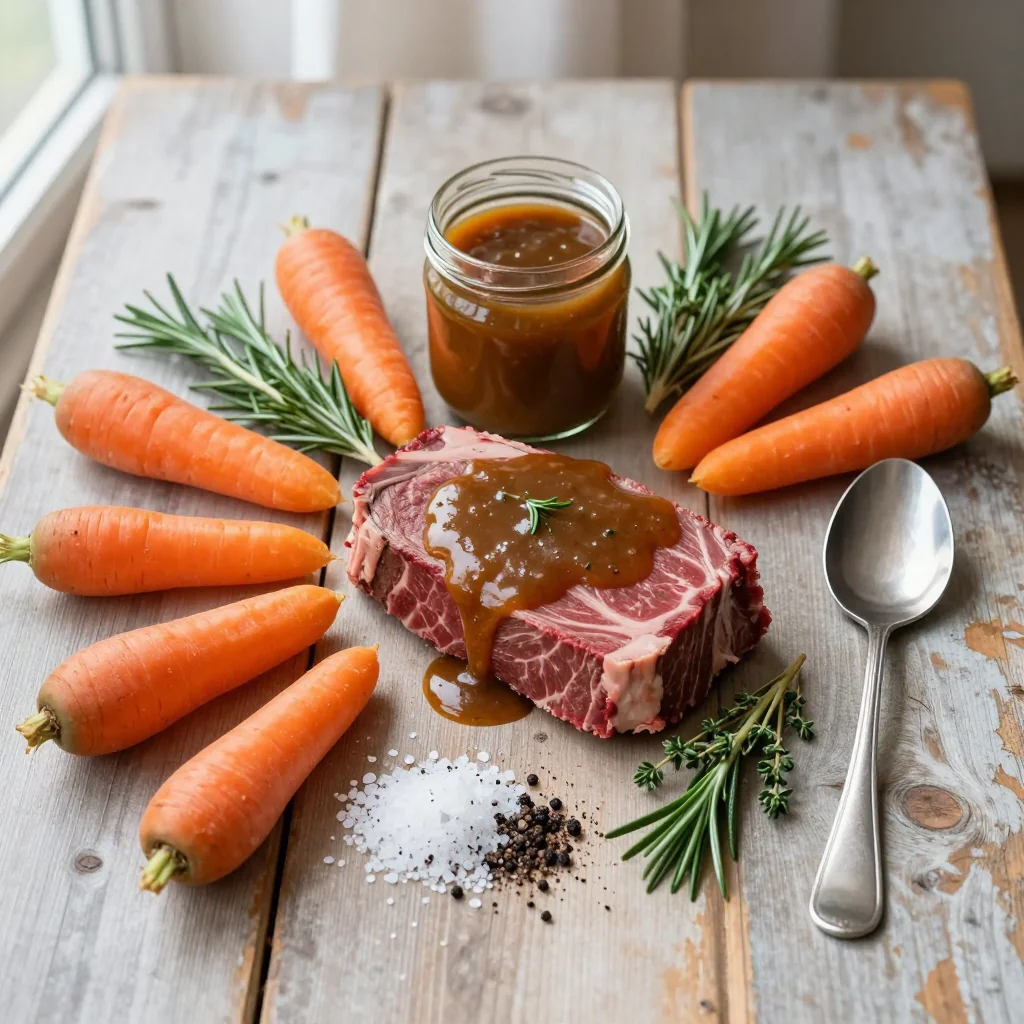
Main Ingredients
- 2 kg (4.5 lb) beef chuck roast, bone‑in
- 2 tbsp olive oil
- 1 large onion, diced
- 4 cloves garlic, minced
- 4 carrots, peeled and cut into 2 cm (¾ in) pieces
- 2 celery stalks, sliced diagonally
- 1 cup (240 ml) beef stock, low‑sodium
- ½ cup (120 ml) dry red wine (preferably Cabernet Sauvignon)
- 2 sprigs fresh rosemary, leaves stripped
- 3 sprigs fresh thyme, leaves stripped
- 1 tbsp sea salt
- 1 tsp freshly ground black pepper
For the Sauce/Seasoning
- 2 tbsp unsalted butter
- 2 tbsp all‑purpose flour (or gluten‑free flour)
- 1 tbsp Worcestershire sauce
- 1 tsp Dijon mustard
- ½ tsp smoked paprika
- ¼ tsp ground allspice
- Salt and pepper to taste
- Optional: 1 tbsp heavy cream for extra richness
Ingredient Notes & Substitutions
When selecting your beef, look for a well‑marbled chuck roast with a thin layer of fat on the outside; the intramuscular fat will melt during cooking, imparting flavor and juiciness. If you prefer a leaner cut, a top round can be used, but you’ll need to add a tablespoon of olive oil to the rub to compensate for reduced fat. Fresh herbs are essential for the aromatic backbone—if rosemary or thyme are unavailable, substitute with dried versions (use one‑third the amount) or add a pinch of herbes de Provence for a similar profile. Choose a full‑bodied red wine that you would enjoy drinking; the wine’s tannins help break down proteins and add depth, while a low‑quality wine can leave a harsh aftertaste.
For dietary restrictions, the recipe is easily adaptable: replace the butter with a plant‑based margarine for a dairy‑free version, and swap all‑purpose flour for cornstarch or a gluten‑free flour blend to keep it gluten‑free. If you’re avoiding alcohol, substitute the wine with an equal amount of beef broth plus a teaspoon of balsamic vinegar to mimic acidity and complexity. Carrots can be swapped for parsnips or turnips for a slightly earthier sweetness, and the beef stock can be replaced with low‑sodium vegetable stock for a lighter flavor. These tweaks maintain the core integrity of the dish while accommodating a broader range of dietary needs.
Equipment Needed
- Large roasting pan with a rack
- Heavy‑bottomed skillet (cast iron works best)
- Meat thermometer
- Sharp chef’s knife
- Cutting board
- Wooden spoon or silicone spatula
- Aluminum foil
- Small whisk (for gravy)
- Measuring cups and spoons
Step‑By‑Step Instructions
Step 1: Prepare the Beef
Pat the chuck roast dry with paper towels, then rub it all over with olive oil, sea salt, and freshly ground black pepper. Sprinkle the rosemary, thyme, and smoked paprika evenly, pressing the herbs into the surface so they adhere during searing. Let the seasoned meat rest at room temperature for 20 minutes; this helps the rub penetrate and ensures even cooking.
Step 2: Sear the Roast
Heat a heavy skillet over medium‑high heat until shimmering, then add the roast. Sear each side for 4–5 minutes, or until a deep golden‑brown crust forms—look for a rich, caramelized color and a fragrant aroma. Transfer the seared roast to a plate; the pan drippings will become the base for your gravy.
Step 3: Sauté Aromatics
In the same skillet, reduce the heat to medium and add the diced onion, minced garlic, sliced celery, and carrot pieces. Cook, stirring occasionally, for 6–8 minutes until the vegetables soften and the onions turn translucent, releasing their natural sweetness.
Step 4: Deglaze with Wine
Pour the red wine into the pan, scraping the browned bits from the bottom with a wooden spoon. Allow the wine to reduce by half, about 5 minutes, until it thickens slightly and the sharp alcohol scent mellows into a fragrant, velvety base.
Step 5: Assemble the Roast
Place the seared roast on a rack inside a large roasting pan. Arrange the sautéed vegetables around the meat, then pour the wine‑reduced mixture and beef stock over everything, ensuring the liquid reaches at least halfway up the sides of the roast.
Step 6: Roast in the Oven
Preheat the oven to 150 °C (300 °F). Cover the pan loosely with aluminum foil and roast for 2 hours, then remove the foil and continue roasting for an additional 45 minutes to develop a deep crust. Use a meat thermometer; the internal temperature should read 63 °C (145 °F) for medium‑rare or 71 °C (160 °F) for well‑done.
Step 7: Rest the Meat
Remove the roast from the oven and transfer it to a cutting board. Tent it loosely with foil and let it rest for 15 minutes; this redistributes the juices, making each slice succulent rather than dry.
Step 8: Make the Gravy
While the meat rests, pour the pan juices into a saucepan, discarding excess fat. Melt butter over medium heat, whisk in flour, and cook for 2 minutes to form a roux. Gradually whisk the liquid into the roux, simmering until the gravy thickens, about 5 minutes. Stir in Worcestershire sauce, Dijon mustard, and a pinch of allspice. Adjust seasoning with salt and pepper, and for extra silkiness, swirl in heavy cream if desired.
Step 9: Slice and Plate
Using a sharp carving knife, slice the roast against the grain into 1‑cm (½‑in) thick slices. Arrange the meat on a serving platter, nestle the roasted carrots and onions around it, and drizzle the hot gravy generously over the top.
Step 10: Garnish and Serve
Finish with a sprinkle of freshly chopped parsley for a pop of color and a hint of freshness. Serve immediately with your favorite sides—mashed potatoes, buttered peas, or a crisp green salad—while the gravy is still steaming.
Expert Tips for Perfect Results
Tip 1: Dry the Beef Thoroughly
Moisture on the surface creates steam, which prevents a proper crust. Pat the roast dry with paper towels before seasoning to ensure a deep, caramelized sear.
Tip 2: Use a Meat Thermometer
Relying on time alone can lead to over‑ or under‑cooked meat. Insert the probe into the thickest part of the roast; aim for 63 °C (145 °F) for medium‑rare and let carry‑over heat finish the cooking.
Tip 3: Rest Before Carving
Resting allows the juices to redistribute, preventing them from spilling out when you slice. A 15‑minute rest is crucial for a juicy result.
Tip 4: Deglaze Early
Scraping the browned bits after sautéing vegetables captures the deepest umami flavors. Adding wine at this stage also prevents a bitter taste that can develop if the wine is reduced too aggressively later.
Tip 5: Adjust Gravy Thickness
If the gravy becomes too thick, thin it with a splash of warm beef stock. Conversely, if it’s too thin, whisk in a teaspoon of cornstarch slurry (cornstarch mixed with cold water) and simmer briefly.
Tip 6: Finish with Fresh Herbs
Add a handful of chopped parsley or chives just before serving. The fresh herbs brighten the rich sauce and add a subtle peppery note.
Common Mistakes to Avoid
- Over‑searing the roast: Burning the exterior locks in a bitter flavor. Keep the heat medium‑high and watch for a deep brown, not black, crust.
- Skipping the rest period: Cutting immediately releases all juices onto the plate. Allow at least 15 minutes of rest to keep the meat moist.
- Using too much flour for the gravy: This creates a pasty texture. Whisk the flour into melted butter slowly, forming a smooth roux before adding liquid.
- Cooking at too high a temperature: High heat dries out the interior. Maintain 150 °C (300 °F) for gentle, even cooking.
- Neglecting to season the vegetables: Carrots and onions can taste bland. Toss them with a pinch of salt and pepper before roasting.
Recipe Variations
Herb‑Crusted Beef Roast
Replace the simple herb rub with a mixture of chopped rosemary, thyme, sage, and minced garlic bound together with Dijon mustard. This creates a fragrant crust that adds an extra layer of flavor.
Spicy Chipotle Roast
Add 1 tsp chipotle powder and a tablespoon of adobo sauce to the seasoning blend. The smoky heat pairs beautifully with the sweet carrots, giving the dish a Southwestern twist.
Asian‑Inspired Soy‑Ginger Glaze
Swap the red wine for ½ cup soy sauce and ¼ cup mirin, and add 1 tbsp freshly grated ginger to the pan before deglazing. Finish with a drizzle of toasted sesame oil for an umami‑rich, slightly sweet glaze.
Root‑Vegetable Medley
Include parsnips, turnips, and sweet potatoes alongside carrots. The mix of earthy roots creates a rustic, hearty side that absorbs the gravy beautifully.
How to Serve
This roast shines when paired with classic accompaniments that balance its richness. Creamy mashed potatoes or buttery Yorkshire puddings are traditional choices that soak up every drop of gravy. For a lighter contrast, serve a crisp arugula salad tossed with lemon vinaigrette, which adds a peppery bite and bright acidity to cut through the meat’s depth. Steamed green beans, glazed with a touch of butter and toasted almonds, provide a crunchy texture that complements the melt‑in‑the‑mouth beef.
Presentation matters: arrange slices of roast on a warm platter, fan them out slightly, and nestle the caramelized carrots and onions around the edges. Drizzle a spoonful of gravy over each slice just before serving, and garnish with a sprinkle of chopped parsley or chives for a pop of color. If you’re hosting a formal dinner, consider a shallow bowl of extra gravy on the side, allowing guests to control the amount they pour over their plates.
Storage & Reheating
Refrigerator Storage
Cool the roast to room temperature, then transfer to an airtight container. Store in the refrigerator for up to 4 days. Keep the gravy in a separate sealed jar to preserve its silky texture.
Freezing Instructions
Slice the roast and place portions in freezer‑safe bags with a thin layer of gravy to prevent freezer burn. Freeze for up to 3 months. Thaw overnight in the refrigerator before reheating.
Reheating
Reheat in a low oven (150 °C/300 °F) covered with foil for 20–30 minutes, adding a splash of broth if the meat looks dry. For individual servings, gently warm in a saucepan over medium heat, stirring the gravy continuously to avoid scorching.
Frequently Asked Questions
Final Thoughts
This Beef Roast with Gravy and Carrots combines time‑honored techniques with thoughtful ingredient choices to deliver a dish that is both comforting and impressive. The balance of a perfectly seared crust, melt‑in‑the‑mouth interior, and a glossy, herb‑infused gravy makes it a standout centerpiece for any gathering. Whether you’re feeding a bustling family or hosting an intimate dinner, the recipe’s reliable steps and adaptable nature ensure consistent, restaurant‑quality results.
Give this roast a try this weekend and experience the aroma that fills your kitchen as the meat slowly transforms into a succulent masterpiece. We’d love to hear how your roast turned out—share your photos, tweaks, or any questions in the comments below, and let’s keep the conversation cooking!
Beef Roast with Gravy and Carrots
A classic, hearty roast perfect for family gatherings and special occasions.
Ingredients
- 2 kg beef chuck roast, bone‑in
- 2 tbsp olive oil
- 1 large onion, diced
- 4 cloves garlic, minced
- 4 carrots, cut into 2 cm pieces
- 2 celery stalks, sliced
- 1 cup beef stock
- ½ cup red wine
- 2 sprigs rosemary
- 3 sprigs thyme
- 1 tbsp sea salt
- 1 tsp black pepper
- 2 tbsp butter
- 2 tbsp flour
- 1 tbsp Worcestershire sauce
- 1 tsp Dijon mustard
- ½ tsp smoked paprika
- ¼ tsp ground allspice
Instructions
- Pat roast dry, rub with oil, salt, pepper, and herbs; rest 20 min.
- Sear roast 4‑5 min per side until deep brown.
- Sauté onion, garlic, carrots, and celery until softened.
- Deglaze with red wine, reduce by half.
- Place roast on rack, add vegetables, pour wine mixture and stock.
- Cover and roast at 150 °C for 2 hr, uncover for 45 min.
- Rest roast 15 min before carving.
- Make gravy: roux butter + flour, whisk in pan juices, season.
- Slice roast, arrange with carrots, drizzle gravy.
- Garnish with parsley and serve hot.
Chef's Notes
For extra flavor, marinate the roast overnight with the herb rub. If you prefer a thicker gravy, finish with a tablespoon of cold butter whisked in just before serving.