Last Tuesday I walked into my kitchen at 7:03 p.m. with the manic gleam of someone who had just realized pumpkin purée, white miso, and fresh sage could share the same bowl and absolutely nothing could stop me. The rain was smacking the windows like an over-eager percussionist, my fridge held half a carton of tofu and the tail-end of a bag of spinach, and the only thing standing between me and total ramen glory was the skepticism of every food magazine that told me ramen had to be either tonkotsu or shōyu. Spoiler: they were wrong. By 7:48 the house smelled like autumn had collided with a Japanese izakaya, my roommate had materialized with two spoons, and I was ladling out a broth so silky it could have been knitted by angels who moonlight as textile artists. If you've ever stared into the abyss of bland pumpkin soup and thought, "This needs umami and a noodle parade," congratulations—your culinary soulmate just arrived.
Picture this: the onions hit the oil and that first sizzle sounds like applause from a very small, very enthusiastic audience. Garlic and ginger jump in next, and the kitchen becomes a fog of sweet-sharp perfume that crawls into every corner like it's paying rent. Then comes the miso, caramelly and mysterious, followed by the pumpkin purée that plops into the pot with the confidence of someone who knows it's about to become the main character. Pour in the broth and watch the color turn into a sunset you'd book a plane ticket to see. The first taste—straight from the wooden spoon because we're not cowards here—makes you close your eyes involuntarily, the way people do when the chorus of their favorite song finally drops. That moment is the culinary equivalent of finding twenty bucks in your winter coat, except better, because you can eat it.
Most pumpkin ramen recipes I've tried taste like someone blended a pie and hoped for the best. They lean too sweet, too cinnamon-heavy, too...confused. This version laughs in the face of dessert spice, choosing instead the nutty depth of toasted sesame oil, the forest-like swagger of fresh sage, and the fermented swagger of white miso. The result is savory first, creamy second, and cozy all the way through. I'll be honest—after my first test batch I stood over the sink eating noodles directly from the strainer because I couldn't be bothered to find a bowl. My future self will probably do the same, and I refuse to apologize.
Stay with me here—this is worth it. By the time you ladle this amber broth over springy ramen noodles and watch the spinach wilt on contact while sage leaves frizzle like tiny green firecrackers, you'll understand why I'm annoyingly smug about this recipe. Let me walk you through every single step—by the end, you'll wonder how you ever made it any other way.
What Makes This Version Stand Out
Velvet-Savory: The broth rides the line between creamy and brothy thanks to pumpkin body without dairy heaviness, so you feel nourished, not narcoleptic.
Umami Fireworks: White miso teams up with soy-bathed shiitake and that whisper of toasted sesame so every slaps your palate with layered savoriness.
Weeknight Viable: Thirty-five minutes from pantry to face, including the time it takes to press tofu between two plates while you dance to whatever playlist is currently saving your sanity.
Color-therapy Orange: That hue glows like a harvest moon and will single-handedly make your Instagram followers believe you have your life together—even if the rest of your kitchen looks like a tornado hit a farmers' market.
Plant-powered Crowd-pleaser: Meat lovers don't miss meat when chewy tofu, meaty mushrooms, and slurp-worthy noodles show up wearing the flavor tuxedo of miso.
Make-ahead Friendly: Broth improves overnight like a good revenge plot; noodles get cooked fresh so nothing turns gummy.
Sage That Actually Crisps: Most recipes tell you to toss herbs in at the end and wonder why they're chewy. We fry them into crackly flags that taste like autumn itself invented potato chips.
Alright, let's break down exactly what goes into this masterpiece...
Inside the Ingredient List
The Flavor Base
Vegetable oil is the reliable friend who shows up on moving day—nothing fancy, but everything falls apart without it. When it shimmers in the pot, it's telling the onions, "Your ride is here." Yellow onion brings natural sweetness that rounds the pumpkin's edge; skip it and the broth tastes like it's missing its emotional support animal. Garlic and ginger arrive like the dynamic duo of aromatics, minced so fine they practically dissolve, leaving behind the edible equivalent of a warm hug from someone wearing a really good sweater.
White miso paste is the quiet genius in the back row who actually knows all the answers. It's fermented longer than yellow, shorter than red, landing in that sweet spot where umami blooms but doesn't bulldoze. Buy it in plastic tubs from the refrigerated section, not those shelf-stable packets that taste like dusty salt. If you flip the tub and see a label that lists rice and soybeans without weird stabilizers, you've found the good stuff.
The Texture Crew
Pumpkin purée is canned autumn, but check the label—if it lists "pumpkin pie mix," run away faster than you would from a text that says "we need to talk." You want straight-up squash, silky and plain, ready to sponge up all the savory flavors we're about to throw at it. Shiitake mushrooms bring chew and that fifth-taste depth; remove the stems (save them for vegetable stock) and slice the caps into meaty planks that look like tiny mahogany cutting boards. Firm tofu, pressed under a Dutch oven for ten minutes while you prep everything else, turns into golden-edged cubes that soak up broth like edible sponges.
Baby spinach wilts on contact, so we add it at the very end, letting residual heat turn it into emerald ribbons without that sad-sack gray color that overcooked greens always seem to achieve. Corn kernels are the sweet pop rocks of the bowl; frozen works in a pinch, but if you can slice fresh off the cob, summer itself will write you a thank-you note.
The Unexpected Star
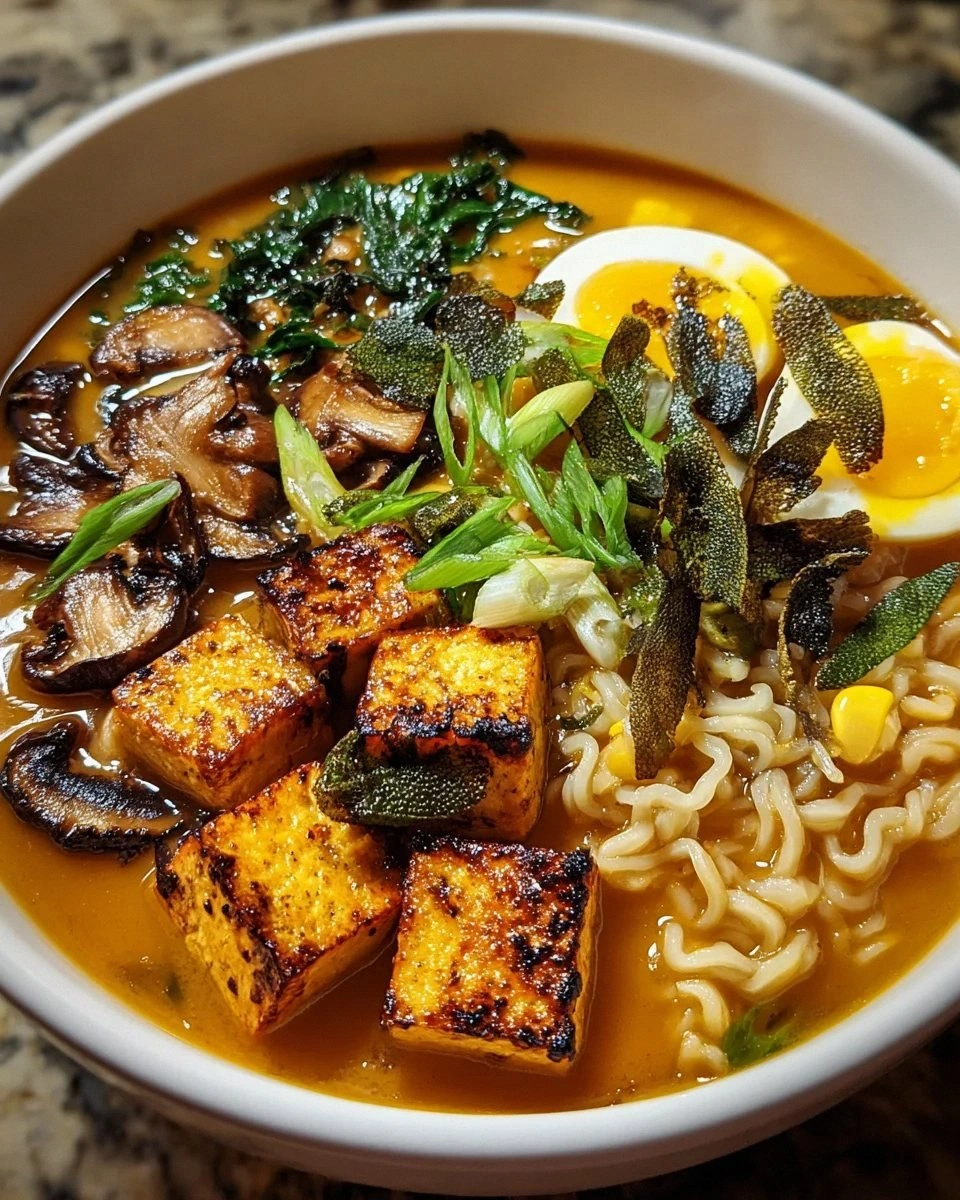
Fresh sage leaves look unassuming—fuzzy, oval, smelling faintly of pine and eucalyptus—but drop them into hot oil and they transform into dark-green lacework that crackles between your teeth. The trick is patience: too low and they go limp like forgotten salad, too high and they burn into bitter ash. Aim for the sizzle that sounds like applause made of tiny firecrackers. Once crisp, they perfume the entire bowl with a woodsy note that makes the pumpkin taste more sophisticated, like it just got back from a semester abroad.
The Final Flourish
Toasted sesame oil is the brocade trim on our velvet robe—used sparingly at the end so its nutty perfume doesn't cook off. Mirin, the optional sweet rice wine, balances the miso's salt much like a squeeze of lime rescals a too-rich curry. If you don't have mirin, a pinch of sugar dissolved in a tablespoon of water keeps the harmony intact. Ramen noodles are obviously the carb lifeline; fresh ones cook in two minutes flat, dried ones need about four—either way, salt the water like you're seasoning the Pacific.
Everything's prepped? Good. Let's get into the real action...
The Method — Step by Step
- Heat a heavy-bottomed pot over medium heat until a drop of water skitters across like it's late for a meeting. Add 2 tablespoons vegetable oil and swirl so the surface gleams like obsidian. Toss in diced yellow onion and listen for the gentle sizzle that tells you the pot isn't too hot; we're building flavor, not racing to the finish. Stir occasionally until the edges turn translucent and the centers look sweaty—about 5 minutes—then clear a small circle in the middle, drop in 1 tablespoon minced garlic and 1 tablespoon grated ginger, and let them toast for 30 seconds before folding everything together. Your kitchen should smell like you've invited a very polite vampire hunter to dinner.
- Scoop 3 tablespoons white miso into the pot and mash it into the onions with the back of a wooden spoon; think of it as distributing tiny umami bombs that will later explode into complexity. Let the miso caramelize for 2 minutes—yes, it will stick slightly, and yes, those browned bits are pure gold. Deglaze with 1 tablespoon soy sauce, scraping the bottom like you're coaxing a shy cat out from under the bed. The mixture will look like wet sand at low tide; that's perfect.
- Spoon in 1 cup pumpkin purée and stir until the color turns into a sunset that got promoted to manager. Cook for another 2 minutes so the pumpkin loses its raw canned edge and starts to smell like autumn decided to go savory. Pour 4 cups vegetable broth in a slow stream, stirring to dissolve any stubborn miso patches clinging to the corners like introverts at a party. Add 1 tablespoon mirin if you're using it, bring everything to a gentle simmer, then drop heat to low and let the broth burp happily for 10 minutes while flavors meld like old friends who haven't seen each other since college.
- Meanwhile, heat a non-stick skillet over medium-high heat with 1 tablespoon vegetable oil. Blot your pressed tofu with the dedication of someone removing a phone screen protector, then cube it into ½-inch pieces that look like tiny ivory dice. When the oil shimmers, lay the tofu in a single layer and step away—let it sear for 3 minutes until the bottoms turn golden like beach sand at sunset. Flip each cube with chopsticks (or tongs if you're less coordinated) and repeat until most sides sport a gentle tan; you're building a crust that will sponge up broth later.
- Remove tofu to a plate, return skillet to heat, and add another teaspoon oil. Scatter 8 ounces sliced shiitake caps in an even layer; resist the urge to stir for 90 seconds so they sear rather than steam. When the edges caramelize into mahogany, season with a splash of soy sauce and a grind of pepper, then toss for another minute. The mushrooms will shrink dramatically and smell like someone bottled forest floor after rain.
- Bring a separate pot of water to a rolling boil, salt it until it tastes like the ocean on a brave day, and drop your ramen noodles. Fresh noodles need 90 seconds, dried ones about 4—taste a strand at the lower end; it should yield with a tiny backbone of bite. Drain immediately and rinse under hot water to remove excess starch so they don't clump like nervous teenagers at a dance.
- While noodles cook, crank the same skillet to medium-high and add ¼ cup neutral oil. When a sage leaf dropped in sizzles instantly, add the rest of the leaves in a single layer—stand back because they spit like tiny green fireworks. Fry 45-60 seconds per side until they darken and feel crisp like autumn leaves you mailed to yourself. Transfer to paper towel, where they'll continue to crisp as they cool.
- Return broth to a gentle simmer and taste—add salt sparingly because miso and soy already brought salty luggage. Stir in 1 cup baby spinach and the seared mushrooms; the greens will wilt into silky ribbons within 30 seconds. Drizzle 1 teaspoon toasted sesame oil over the surface and swirl once—think of it as applying perfume behind the ears rather than bathing in it.
- Divide noodles among four deep bowls, ladle the glowing orange broth to shoulder height, and top with tofu cubes, corn kernels, green onion slivers, and those crackly sage leaves that look like they could win architecture awards. Serve immediately with chopsticks and a spoon because you're going to want to drink the dregs like the civilized heathen you are.
That's it—you did it. But hold on, I've got a few more tricks that'll take this to another level...
Insider Tricks for Flawless Results
The Temperature Rule Nobody Follows
Miso is a living paste full of beneficial bacteria that will throw a tantrum if boiled; keep your broth below a simmer once the miso joins the party. Think jacuzzi temperature, not lobster pot. If you accidentally let it boil, the flavor flattens faster than soda left open overnight, and you'll be left wondering where the magic went. A gentle steamy sigh is all you want—tiny bubbles should kiss the surface like shy goldfish.
Why Your Nose Knows Best
When the onions are perfectly translucent, they'll smell sweet and faintly nutty; if they still sting, give them another minute. Same goes for mushrooms—when they release that earthy, almost meaty aroma, they're ready for soy. Trust your olfactory bulb; it's been honing its skills since you were a toddler sniffing out cookies. Ignore it and you'll serve bowls that taste like they were made by someone who thinks beige is a personality.
The Five-Minute Rest That Changes Everything
After you ladle broth over noodles, let the bowl sit for 5 minutes before topping with sage. This brief pause lets the noodles absorb surface flavors without becoming soggy, and the temperature drops to that perfect slurping zone where you won't scald your tongue into next week. Cover with a small plate so heat stays in but steam doesn't turn your crispy sage into limp confetti. Your patience will be rewarded with layers of flavor that taste like they took all day.
Press Tofu Like You Mean It
Wrap the block in a kitchen towel, set it on a plate, top with another plate, and pile on something heavy—cookbooks, a cast-iron pan, your unresolved emotional baggage. Ten minutes is the minimum, 20 is better. Properly pressed tofu sears instead of steams, giving you golden cubes with custardy centers that drink up broth like they've been waiting their whole lives for this moment. Skip this step and you'll get sad, spongy squares that taste like disappointment dipped in soy.
The Last-Second Sesame Rule
Toasted sesame oil loses its perfume faster than a pop song drops off the charts. Add it off heat, right before serving, and your broth will sing with nutty fragrance that makes people close their eyes involuntarily. If you forget and stir it in while simmering, you'll still get flavor, but that intoxicating aroma will have ghosted you faster than a bad Tinder date. Keep the bottle in the fridge to extend its life; room temperature is where good sesame oil goes to become vaguely rancid.
Creative Twists and Variations
This recipe is a playground. Here are some of my favorite ways to switch things up:
Spicy Miso Crunch
Whisk 1 tablespoon gochujang into the miso step and finish with a drizzle of chili crisp. The heat cuts through pumpkin's sweetness like a sassy best friend telling you the truth about those pants. Top with crushed roasted peanuts for crunch that shatters between slurps. If you sweat while eating, you're doing it right.
Coconut Curry Escape
Swap vegetable broth for 2 cups broth plus 1 cup coconut milk, and add 1 teaspoon Thai red curry paste with the garlic. The broth becomes velvet with a tropical accent, and sage magically tastes like it just got back from Phuket. Finish with lime juice and cilantro if you want your mouth to feel like a vacation.
Smoky Bacon-ish (Sans Pig)
Replace tofu with tempeh that you've crumbled and pan-fried in smoked paprika and maple. The smoky-sweet nuggets give you that bacon vibe without the oink. Add a dash of liquid smoke to the broth if you're the kind of person who misses campfires and wants dinner to remind you of them.
Sweet Potato Swap
No pumpkin? Roast a sweet potato at 400 °F for 45 minutes, scoop out the flesh, and mash. The flavor is slightly sweeter and earthier, turning the broth into something that tastes like sweater weather in liquid form. Add a pinch of cinnamon—just a whisper—to bridge the gap between dessert and dinner without crossing into pie territory.
Green Goddess Edition
Stir in 1 cup baby kale instead of spinach and add ½ cup frozen edamame with the corn. Blend a handful of parsley, basil, and a spoonful of tahini with a splash of broth, then swirl this herby cream on top. The bowl turns into a garden party where pumpkin is the unexpected but charming guest.
Breakfast Ramen Hack
Leftover broth plus a soft-boiled six-minute egg equals breakfast that feels like you tried harder than you did. Warm noodles in the broth, slide in the egg, and top with everything bagel seasoning instead of sage. The yolk mingles with miso-pumpkin to create a sauce you'll want to spread on toast, and suddenly morning feels less like a punishment.
Storing and Bringing It Back to Life
Fridge Storage
Store broth and noodles separately in airtight containers; the broth keeps 4 days, noodles 2. Broth will thicken as it sits—thin with a splash of water or vegetable stock when reheating. Keep tofu, mushrooms, and toppings in their own small containers so they don't sog out. Assemble bowls hot so spinach wilts fresh and sage stays crispy.
Freezer Friendly
Broth freezes like a dream for up to 3 months; leave ½ inch headspace in jars or use silicone muffin trays for single-serve pucks. Noodles do not freeze well—they emerge sad and rubbery, like they've been through a breakup. Freeze extra tofu cubes on a tray, then bag; they thaw in the broth and soak up flavor like champs. Label with date and a note that says "fancy autumn ramen" so future you remembers life can be delicious.
Best Reheating Method
Gently warm broth in a pot over medium-low, whisking to reincorporate any separated miso. Add a tiny splash of water—it steams back to perfection. Drop noodles into the broth for the final 30 seconds to heat through without overcooking. Crisp fresh sage in a skillet while the broth warms; leftovers won't have the same snap, but a 60-second refry brings back most of the crunch. Top with fresh green onion because yesterday's has probably wilted into noodle sadness.