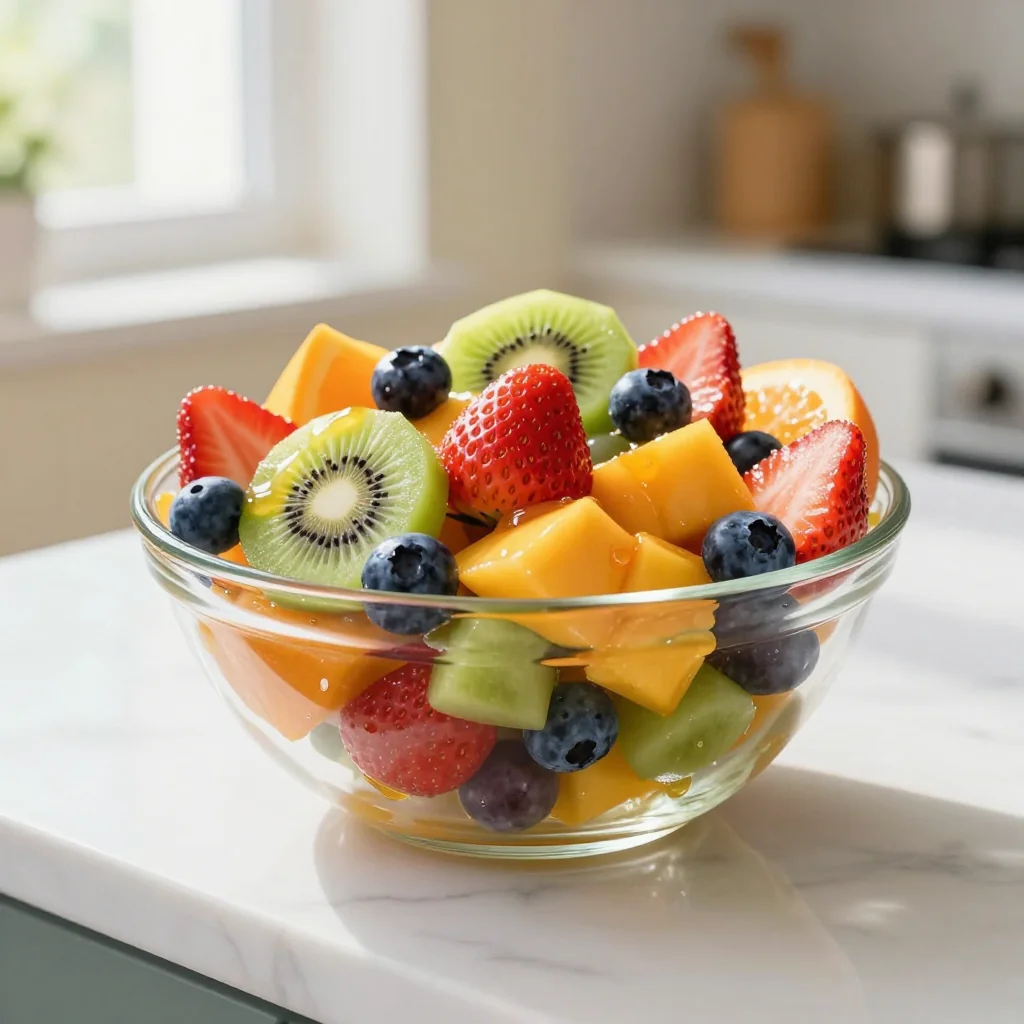
The Rainbow Fruit Salad with Honey Lime Dressing is more than just a collection of colorful produce; it is a celebration of texture, acidity, and natural sweetness that sings on the palate. Inspired by tropical fruit markets in Southeast Asia and the vibrant street food stalls of Mexico, this dish brings together a spectrum of flavors that are simultaneously refreshing and indulgent. The bright hues of mango, kiwi, berries, and citrus not only make the salad a feast for the eyes but also provide a balanced mix of vitamins, antioxidants, and dietary fiber that supports a healthy lifestyle. Whether you are looking for a light starter, a side for a summer barbecue, or a wholesome dessert alternative, this salad delivers a sophisticated yet approachable experience that will impress both casual diners and culinary connoisseurs alike.
My first encounter with a version of this salad was at a beachfront café during a trip to Bali, where the chef drizzled a warm honey‑lime glaze over a medley of tropical fruits and served it on a chilled marble slab. The contrast between the cool, crisp fruit and the warm, glossy dressing created an unforgettable mouthfeel that I have been trying to replicate ever since. This recipe is perfect for brunch gatherings, potlucks, or as a vibrant accompaniment to grilled fish or chicken. The dressing’s bright citrus notes highlight the fruit’s natural sugars while the honey adds a subtle caramel depth, resulting in a flavor profile that is simultaneously sweet, tangy, and lightly floral—truly a rainbow in a bowl.
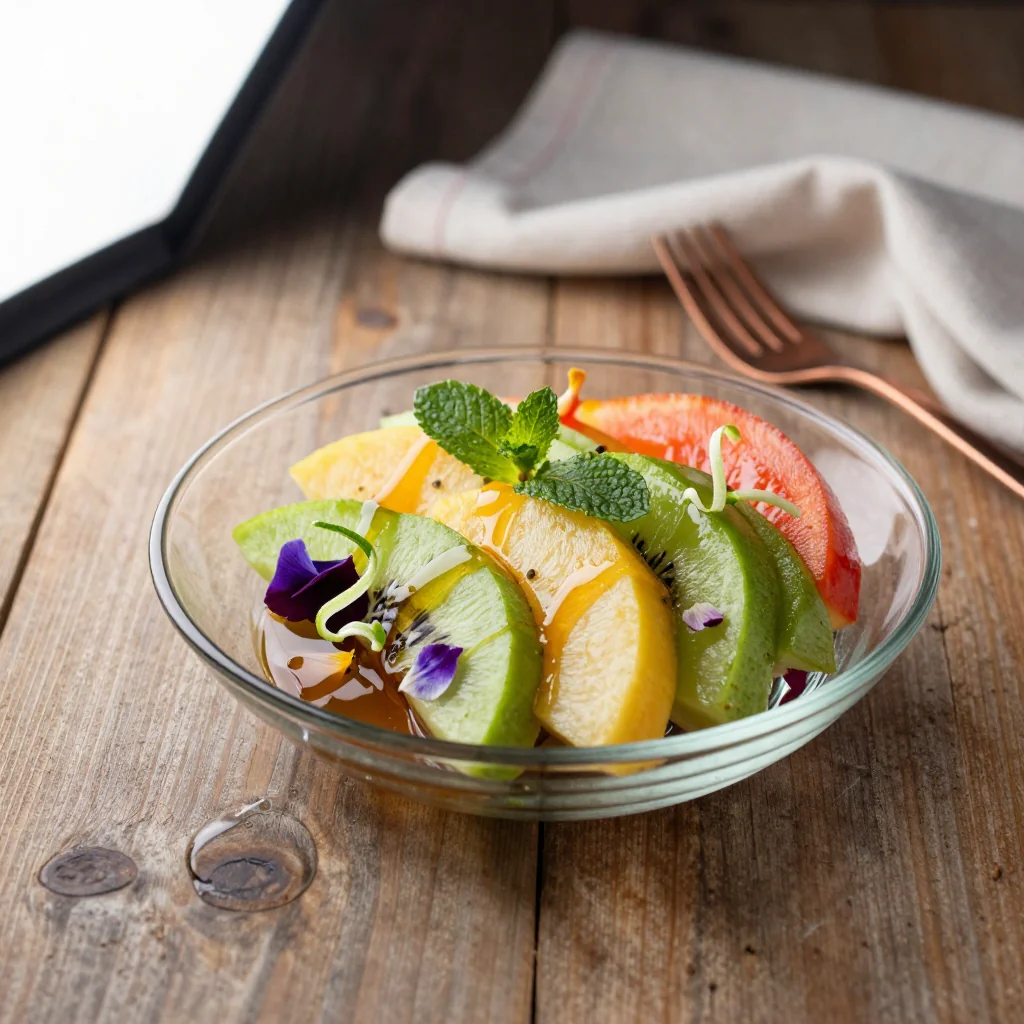
Rainbow Fruit Salad with Honey Lime Dressing
Quick Overview
Difficulty: Easy
Best for: Summer picnics, brunch buffets, family gatherings, light desserts
Taste profile: Sweet‑tart, floral honey, bright citrus, refreshing crunch
Diet info: Vegetarian, vegan (use agave instead of honey), gluten‑free, dairy‑free
Why This Recipe Works
The science behind this salad lies in the balance of acidity and sugar. Lime juice not only adds a sharp, clean tang that cuts through the natural sweetness of the fruit, but it also stabilizes the color of delicate berries and kiwi, preventing oxidation that would otherwise turn them brown. Honey, with its higher fructose content, dissolves quickly at room temperature, creating a glossy coating that clings to each piece of fruit without making the mixture soggy. By whisking the dressing while it is still warm (around 40 °C/104 °F), the honey integrates fully, ensuring a uniform glaze that enhances mouthfeel.
Each fruit is chosen for a specific texture and flavor contribution. Mango provides a buttery softness, kiwi adds a vibrant zing and a pop of green, strawberries contribute a fragrant sweetness, while blueberries bring a subtle earthiness. The addition of fresh mint leaves introduces a cooling herbaceous note that lifts the overall brightness. Compared with simpler fruit salads that rely solely on a squeeze of lemon, this version uses a honey‑lime emulsion that creates a layered taste experience, making the dish feel more polished and restaurant‑quality.
- Benefit 1: Balanced acidity prevents the fruit from becoming mushy, preserving texture.
- Benefit 2: Honey’s natural humectant properties keep the fruit moist for longer periods.
- Benefit 3: Lime’s vitamin C boosts the antioxidant capacity of the salad.
- Benefit 4: The bright color palette makes the dish visually appealing, stimulating appetite.
- Benefit 5: Easy to scale up or down, perfect for both intimate meals and large gatherings.
Ingredients
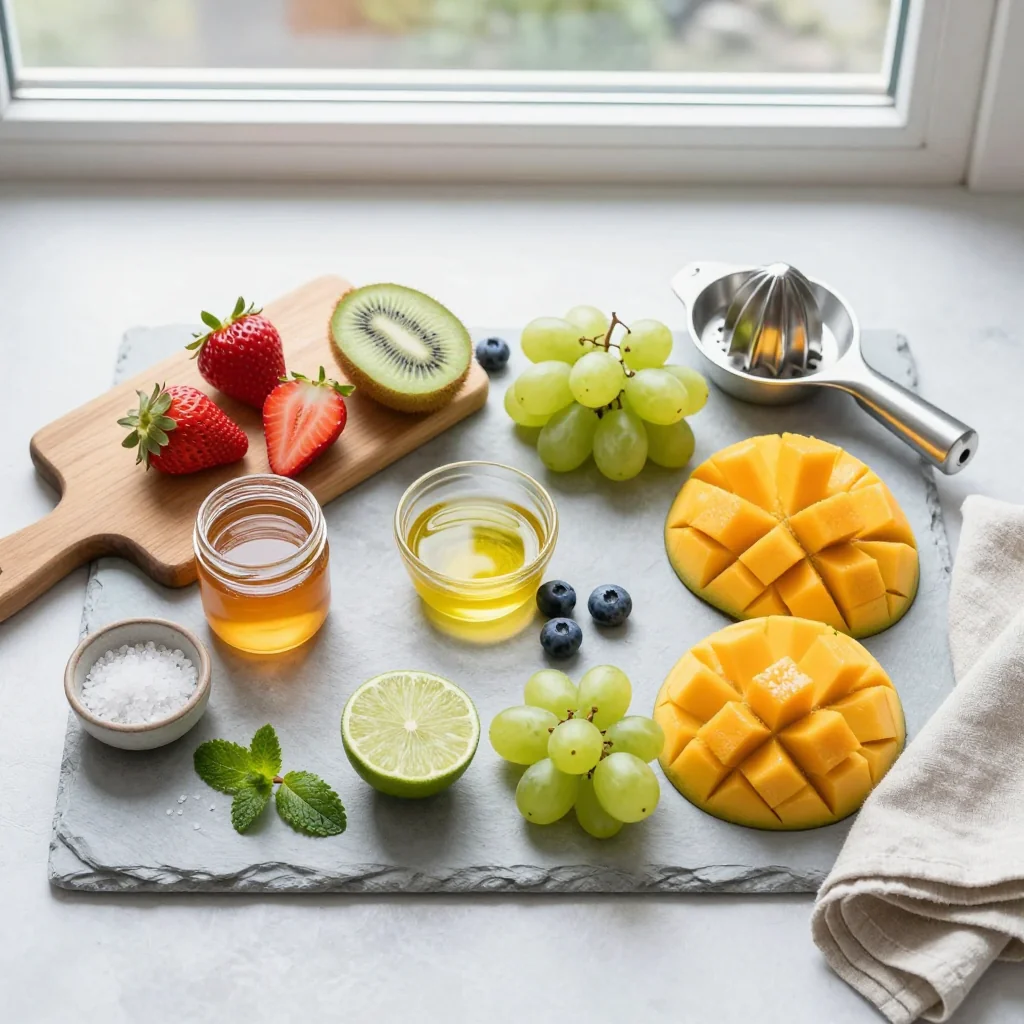
Main Ingredients
- 2 cups diced ripe mango (about 1 large mango)
- 1 cup sliced strawberries, hulled
- 1 cup fresh blueberries
- 1 cup seedless red grapes, halved
- 1 cup kiwi, peeled and quartered
- 1 cup orange segments (about 2 medium oranges)
- ½ cup diced pineapple
- ¼ cup fresh mint leaves, torn
- 1 tablespoon lime zest
For the Sauce/Seasoning
- ¼ cup raw honey (or agave syrup for vegan)
- ¼ cup freshly squeezed lime juice (about 2 limes)
- 2 teaspoons lime zest (additional to fruit)
- 1 tablespoon extra‑virgin olive oil
- ½ teaspoon sea salt, fine
- ¼ teaspoon freshly ground black pepper
- 1 teaspoon finely minced fresh ginger (optional)
- 2 teaspoons finely chopped fresh cilantro (optional)
Ingredient Notes & Substitutions
When selecting fruit, aim for peak ripeness: mango should yield slightly to gentle pressure and have a fragrant aroma; strawberries must be bright red and free of bruises; blueberries should be firm and deep‑blue. For the citrus component, use Persian limes for their aromatic zest; Meyer lemons can be substituted for a sweeter citrus note, though the overall flavor will shift slightly toward floral. Fresh mint adds a cooling contrast—if mint is unavailable, basil or cilantro can be used, but each will impart a distinct herb profile.
To accommodate dietary restrictions, replace honey with agave nectar or maple syrup for a vegan-friendly version. If you need a lower‑sugar option, reduce the honey to 2 tablespoons and add a splash of sparkling water to the dressing for extra moisture without extra sweetness. For a gluten‑free guarantee, ensure any pre‑packaged fruit (such as canned pineapple) is labeled gluten‑free, although fresh fruit is naturally gluten‑free. Finally, if any of the suggested fruits are out of season, swap them with equivalents like papaya, nectarine, or even pomegranate arils for added crunch and a burst of tartness.
Equipment Needed
- Large mixing bowl (at least 5 L capacity)
- Sharp chef’s knife and cutting board
- Microplane or fine grater for zest
- Small whisk or fork for dressing
- Measuring cups and spoons
- Silicone spatula
- Serving platter or shallow bowl
Step-by-Step Instructions
Step 1: Prepare the Fruit
Wash all fresh fruit under cool running water. Pat dry with a clean kitchen towel. Peel the mango and cut it into ½‑inch dice, slice the strawberries, halve the grapes, quarter the kiwi, segment the oranges, and dice the pineapple into similar sized pieces. This uniform size ensures each bite delivers a balanced mix of flavors and textures.
Step 2: Zest and Juice the Limes
Using a microplane, zest two limes, collecting the bright green zest in a small bowl. Then, roll each lime on the countertop to release juices and cut in half. Squeeze to obtain roughly ¼ cup of fresh lime juice, straining out seeds. The zest adds aromatic oils that deepen the citrus character of the dressing.
Step 3: Make the Honey Lime Dressing
In a separate small saucepan, combine ¼ cup honey, ¼ cup lime juice, 2 tsp lime zest, and 1 tbsp olive oil. Warm the mixture over low heat (about 40 °C / 104 °F) for 2‑3 minutes, just until the honey becomes fluid and the ingredients meld. Remove from heat and whisk in sea salt, black pepper, and optional ginger for a subtle warmth.
Step 4: Combine the Fruit
Transfer all prepared fruit into the large mixing bowl. Add the torn mint leaves and lime zest from the fruit itself. Toss gently with a silicone spatula to distribute the aromatics without bruising the delicate berries.
Step 5: Dress the Salad
Drizzle the warm honey‑lime dressing over the fruit mixture. Using the spatula, fold the dressing into the fruit, ensuring each piece is lightly coated. The dressing should gloss the fruit without pooling at the bottom of the bowl.
Step 6: Chill (Optional but Recommended)
Cover the bowl with plastic wrap and refrigerate for 15‑20 minutes. Chilling allows the flavors to meld and the dressing to set slightly, enhancing the overall harmony. If serving immediately, skip this step but be aware the salad will be slightly warmer.
Step 7: Taste and Adjust
Before plating, taste a small spoonful. If the salad feels too tart, drizzle an extra teaspoon of honey; if it needs more brightness, add a splash of additional lime juice. Adjustments should be made in small increments to preserve balance.
Step 8: Plate the Salad
Transfer the salad to a wide, shallow serving platter. Use the spatula to arrange the fruit in a slightly overlapping pattern, showcasing the rainbow of colors. Sprinkle a few extra mint leaves on top for garnish.
Step 9: Add Final Finishing Touches
Lightly drizzle any remaining dressing around the edge of the platter for a glossy finish. If desired, garnish with a pinch of edible flower petals (such as violas) for an extra visual pop.
Step 10: Serve and Enjoy
Serve the salad at room temperature or slightly chilled. It pairs beautifully with grilled seafood, a light quinoa pilaf, or as a standalone refreshing dessert. Encourage guests to scoop from the center to get a full spectrum of fruit in each bite.
Expert Tips for Perfect Results
Tip 1: Use Fruit at Similar Ripeness
Matching ripeness ensures no single fruit overpowers the others. Over‑ripe mango can become mushy, while underripe kiwi may remain too firm and sour.
Tip 2: Warm Dressing, Cool Fruit
Warm the honey‑lime dressing just enough to melt the honey; then immediately pour over chilled fruit. This temperature contrast creates a silky coating without wilting the fruit.
Tip 3: Add Mint at the End
Adding mint leaves right before tossing preserves their bright aroma and prevents the leaves from turning bitter during mixing.
Tip 4: Adjust Sweetness Gradually
Start with the recommended honey amount; taste and add more only if needed. Over‑sweetening can mask the citrus zing.
Tip 5: Use a Wide Bowl
A wide, shallow bowl allows gentle tossing, keeping the fruit pieces intact and evenly coated.
Tip 6: Serve Promptly After Dressing
While the salad can sit for an hour, prolonged storage may cause the fruit to release juices, making the dressing watery. Serve within 30‑45 minutes for optimal texture.
Common Mistakes to Avoid
- Over‑mixing the fruit: Vigorous stirring bruises delicate berries and releases excess juice, resulting in a soggy salad.
- Using cold honey: Cold honey does not blend well, leaving streaks. Warm it gently to achieve a smooth glaze.
- Adding dressing too early: Dressing too far in advance softens the fruit; wait until just before serving.
- Neglecting to zest the lime: Zest provides essential aromatic oils; without it the dressing can taste flat.
- Choosing mismatched fruit textures: Pairing only soft fruits creates a mushy mouthfeel; include crunchy elements like grapes or pineapple.
Recipe Variations
Tropical Coconut Twist
Replace the mint with toasted coconut flakes and add a splash of coconut milk to the dressing for a richer, island‑style flavor.
Spicy Chili Lime
Stir in ½ teaspoon finely chopped red chili or a drizzle of sriracha into the honey‑lime dressing for a subtle heat that balances the sweetness.
Berry‑Heavy Summer Version
Swap mango and pineapple for an extra cup of mixed berries (raspberries, blackberries, and boysenberries) for a more tart and antioxidant‑dense salad.
Herb‑Infused Garden
Combine fresh basil and thyme with the mint, and add a teaspoon of finely chopped rosemary to the dressing for an earthy, garden‑fresh profile.
How to Serve
This salad shines as a standalone light meal on a hot summer day, but it also pairs wonderfully with grilled proteins. Serve alongside lemon‑herb grilled chicken, a platter of shrimp skewers, or a delicate white fish such as snapper. The bright acidity cuts through the richness of the protein, while the honey adds a subtle sweetness that complements smoky char. For a brunch setting, place the salad next to a cheese board featuring soft goat cheese and crusty artisanal bread.
Presentation matters: arrange the fruit in concentric circles on a wide white platter, allowing the colors to radiate outward like a rainbow. Garnish with a few whole mint sprigs, a dusting of lime zest, and, if you like, a handful of edible flower petals for a restaurant‑level finish. Serve the salad in chilled bowls to maintain a refreshing temperature, and provide small serving spoons so guests can scoop a balanced mix of fruit in each portion.
Storage & Reheating
Refrigerator Storage
Transfer any leftovers to an airtight glass container. Store in the refrigerator for up to 24 hours. For best texture, keep the dressing separate and toss just before serving.
Freezing Instructions
This salad is not ideal for long‑term freezing because the high water content of the fruit can become mushy upon thawing. If you must freeze, spread the fruit (without dressing) on a parchment‑lined tray, freeze for 2 hours, then transfer to a zip‑lock bag for up to 1 month. Thaw in the refrigerator and add fresh dressing before serving.
Reheating
No reheating is required. If the salad has chilled too much, let it sit at room temperature for 10‑15 minutes before serving to restore its natural flavors.
Frequently Asked Questions
Final Thoughts
This Rainbow Fruit Salad with Honey Lime Dressing proves that simplicity and elegance can coexist on a single plate. By respecting the natural flavors of each fruit and pairing them with a thoughtfully balanced dressing, you create a dish that is as nutritious as it is visually stunning. The recipe’s flexibility allows you to tailor it to seasonal produce, dietary needs, or personal flavor preferences, making it a reliable go‑to for any occasion.
I encourage you to give this salad a try, experiment with the suggested variations, and share your own twists in the comments below. Whether you serve it at a festive gathering or enjoy it as a refreshing weekday snack, the burst of color and harmony of flavors will keep you reaching for another spoonful—again and again.
Rainbow Fruit Salad with Honey Lime Dressing
A vibrant, refreshing salad that blends sweet tropical fruits with a bright honey‑lime glaze.
Ingredients
- 2 cups diced ripe mango
- 1 cup sliced strawberries
- 1 cup fresh blueberries
- 1 cup seedless red grapes, halved
- 1 cup kiwi, quartered
- 1 cup orange segments
- ½ cup diced pineapple
- ¼ cup fresh mint leaves, torn
- ¼ cup raw honey
- ¼ cup lime juice
- 2 tsp lime zest
- 1 tbsp olive oil
- ½ tsp sea salt
- ¼ tsp black pepper
Instructions
- Wash, dry, and cut all fruit into uniform bite‑size pieces.
- Zest and juice the limes; set aside.
- Warm honey, lime juice, zest, and olive oil over low heat; whisk until smooth.
- Combine fruit and mint in a large bowl; toss gently.
- Drizzle warm dressing over fruit; fold until evenly coated.
- Chill 15 minutes (optional).
- Taste and adjust seasoning with extra honey or lime juice if needed.
- Transfer to a serving platter; garnish with extra mint and lime zest.
- Serve at room temperature or slightly chilled.
- Enjoy the rainbow of flavors and textures!
Chef's Notes
- Use a wide bowl for gentle tossing to keep berries intact.
- Warm dressing only until honey melts; overheating can diminish its floral notes.
- For a vegan version, swap honey with agave nectar.
150
2 g
35 g
0.5 g