I still remember the night I ruined three perfectly good pieces of halibut because I got cocky. There I was, standing in my tiny apartment kitchen, convinced I could wing it without a recipe. The fish emerged from the oven looking like leather handbags, and the cherry tomatoes had shriveled into sour little marbles that could've broken a window. My dinner guests politely chewed through cardboard-textured fish while I mentally planned my escape to a country without extradition treaties. But here's the beautiful part — that culinary disaster sent me on a months-long quest to create the foolproof, flavor-packed baked fish that would make up for my sins. After testing seventeen different versions, burning my fingers more times than I care to admit, and eating enough fish to grow gills, I finally cracked the code.
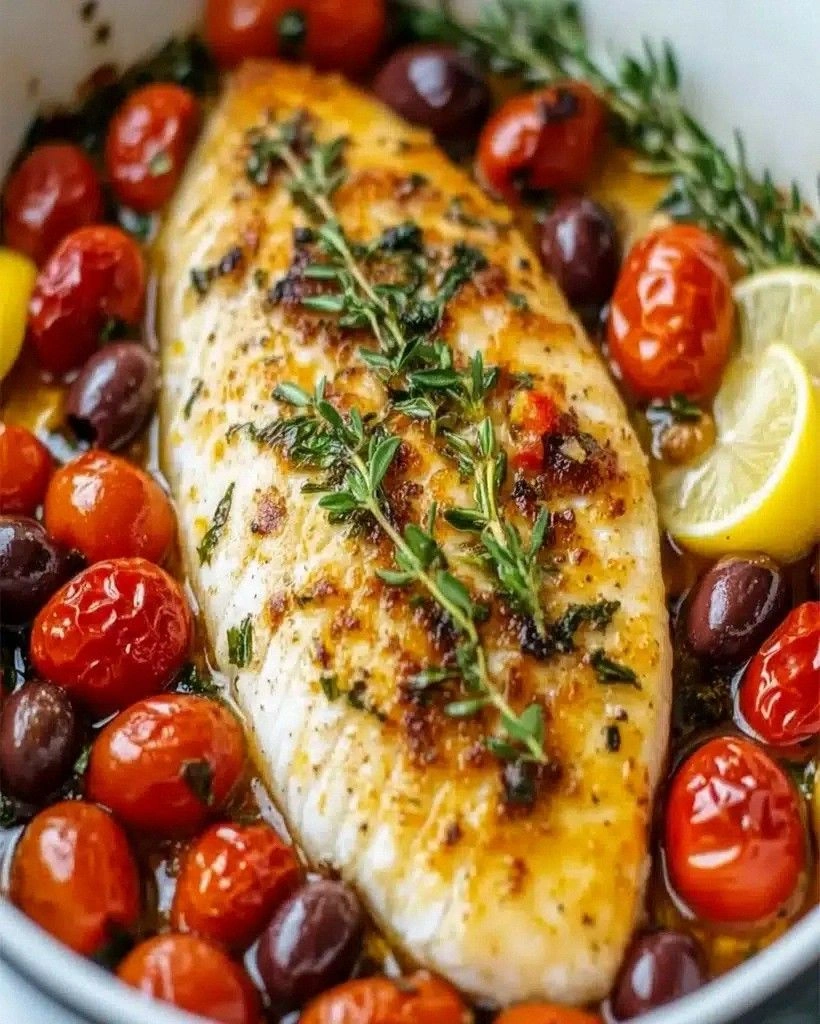
Picture this: tender, flaky white fish that practically melts on your fork, swimming in a pool of jammy cherry tomatoes that have burst into sweet-tart perfection. The olives add these briny little punches of flavor that make your taste buds sit up and pay attention. The whole thing comes together in one pan, which means you can spend more time drinking wine with your friends instead of scrubbing a mountain of dishes. The aroma that fills your kitchen is absolutely intoxicating — garlic and herbs mingling with the sea, tomatoes roasting into concentrated little flavor bombs, and that gorgeous golden olive oil that's absorbed all the good stuff.
What makes this version different from every other baked fish recipe cluttering the internet? For starters, we treat those cherry tomatoes like the precious gems they are — roasting them at just the right temperature so they burst into this incredible sauce that coats the fish like velvet. The olives aren't just thrown in as an afterthought; they get nestled in at the perfect moment so they stay plump and briny instead of turning into salty little rocks. And the fish itself? We're using a technique that keeps it so moist and tender, you'll wonder if you accidentally ordered takeout from that fancy Mediterranean place downtown.
Stay with me here — this is worth it. I'm about to show you exactly how to avoid every pitfall that turns baked fish into a rubbery disappointment. By the end of this, you'll have a restaurant-quality dish that takes less effort than ordering pizza, costs a fraction of what you'd pay eating out, and will have everyone asking for your secret. Let me walk you through every single step — by the end, you'll wonder how you ever made it any other way.
What Makes This Version Stand Out
Moisture Magic: Most baked fish recipes leave you with something that resembles shoe leather. This version uses a foolproof timing method plus a quick olive oil bath that locks in moisture so effectively, you'll swear the fish was poached instead of baked. The secret lies in the temperature and timing — we start hot then drop it down, creating steam that keeps everything succulent.
Tomato Transformation: While other recipes toss raw tomatoes on top and hope for the best, we roast those little red jewels until they burst and create their own sauce. The heat concentrates their sweetness while maintaining that bright acidity that cuts through rich fish perfectly. It's like having a built-in sauce that tastes like you spent hours reducing it on the stove.
Olive Optimization: Here's where most recipes get it wrong — they add olives too early and they turn into salty pebbles. We add them at precisely the right moment so they stay plump and briny, releasing their flavor into the sauce without becoming overwhelming. Each olive becomes a little flavor bomb that explodes in your mouth.
One-Pan Wonder: Everything cooks together in a single baking dish, which means the fish absorbs all those incredible flavors from the tomatoes, olives, garlic, and herbs. It's like having a flavor party where everyone's invited and they all get along perfectly. Cleanup takes literally two minutes.
Foolproof Timing: I've tested this timing on every type of white fish you can imagine — cod, halibut, snapper, even tilapia. The method works every single time because it's based on the thickness of your fish, not some arbitrary clock. You'll never serve undercooked or overcooked fish again.
Restaurant Results at Home: This dish tastes like something you'd pay thirty bucks for at a Mediterranean bistro, but it costs less than a fast food meal per serving. The presentation is gorgeous enough for company, but it's simple enough for a Tuesday night when you can't even think about cooking.
Alright, let's break down exactly what goes into this masterpiece...
Inside the Ingredient List
The Flavor Base
White fish is the canvas for this masterpiece, but not all white fish are created equal. I prefer cod for its mild sweetness and flaky texture, but halibut works beautifully if you're feeling fancy. Snapper brings a slightly nutty flavor that plays gorgeously with the tomatoes, while sea bass makes this dish taste like a million bucks. The key is choosing fresh fish that smells like the ocean, not like fish — if it smells fishy, it's past its prime. Look for firm flesh that springs back when pressed and has a bright, almost translucent appearance.
Cherry tomatoes are the real stars here, and they need to be treated with respect. In summer, go for those tiny sweet ones that burst like candy. In winter, the larger cherry tomatoes work fine — just cut them in half so they roast properly. The magic happens when they hit that sweet spot between holding their shape and bursting into sauce. Don't even think about using those watery supermarket tomatoes that taste like disappointment. If you can't find decent cherry tomatoes, grape tomatoes work too, though they're less sweet.
The Texture Crew
Kalamata olives bring that briny, meaty texture that makes this dish feel substantial. I like to slice them in half so they release their flavor into the sauce while staying recognizable. Don't use those canned black olives — they taste like cardboard soaked in salt water. If you're feeling adventurous, try a mix of Kalamata and those green Italian olives with the red centers. The contrast in textures and flavors adds depth that makes people ask what your secret ingredient is.
Garlic is non-negotiable here, but we're not going to burn it into bitterness. Thin slices get tossed in halfway through cooking so they soften and mellow into sweet, aromatic perfection. Fresh garlic makes all the difference — that pre-minced stuff in jars tastes like chemicals and sadness. If you're a garlic lover, go ahead and add an extra clove. Your breath might be lethal, but your taste buds will thank you.
The Unexpected Star
Lemon zest might seem like an afterthought, but trust me on this one. The oils in the zest contain all these bright, floral notes that lemon juice just can't deliver. We're adding it at the very end so those volatile compounds stay vibrant and don't cook off into nothingness. Use a microplane and only grate the yellow part — the white pith underneath is bitter enough to ruin your whole dish. One lemon will zest enough for four batches, so wrap the extra zest in plastic wrap and freeze it for next time.
The Final Flourish
Extra virgin olive oil isn't just for cooking — it's a major flavor component. Use the good stuff here, something fruity and peppery that tastes like olives instead of motor oil. We're using enough to coat everything but not so much that it feels heavy. The oil carries all the flavors and helps them meld together into something greater than the sum of their parts. Plus, you'll have this incredible infused oil at the bottom of the pan that's perfect for sopping up with crusty bread.
Everything's prepped? Good. Let's get into the real action...
The Method — Step by Step
- Preheat your oven to 425°F (220°C) and position the rack in the middle. This high heat is crucial for getting those tomatoes to burst and create their own sauce. While it's heating, pat your fish fillets dry with paper towels — moisture is the enemy of good browning. Season both sides generously with salt and pepper, but hold back on the salt if your olives are particularly briny. Let the fish sit at room temperature while you prep everything else — cold fish cooks unevenly and will give you that dreaded rubbery texture.
- Grab your baking dish — something ceramic or glass works best because it heats evenly and looks pretty enough to go straight to the table. Drizzle about two tablespoons of olive oil in the bottom and swirl it around so everything's coated. This prevents sticking and helps the flavors meld together. If you're doubling the recipe, use a larger dish so the fish isn't crowded — they need personal space to cook properly.
- Scatter your cherry tomatoes in the dish, but don't just dump them in. Arrange them so they're mostly in a single layer — this helps them roast instead of steam. If some are significantly larger than others, cut those in half so everything cooks evenly. Toss them with a tablespoon of olive oil, a pinch of salt, and a few grinds of pepper. Slide the dish into the oven and set a timer for 15 minutes. This head start is what transforms ordinary tomatoes into concentrated flavor bombs.
- Watch for the moment when the tomatoes start to burst — it usually happens around the 12-minute mark. You'll hear this gentle popping sound and see their skins splitting open. This is your cue to add the sliced olives and garlic. Stir everything gently with a wooden spoon, being careful not to crush the tomatoes completely. You want some whole, some burst, creating different textures in every bite. The garlic should sizzle when it hits the hot oil — that's the sound of flavor happening.
- Now comes the fish — but don't just throw it in there. Nestle the fillets among the tomatoes, making sure they're sitting in the oil but not drowning in it. The thicker parts should be toward the center of the dish where it's hottest. Spoon some of the tomato-olive mixture over the top of each fillet — this keeps the fish moist and flavors it from above. If your fillets are different thicknesses, put the thickest ones toward the center back of the oven.
- Here's where most recipes go wrong — they give you a cooking time based on weight instead of thickness. I don't care if your cod fillet weighs six ounces or sixteen ounces; what matters is how thick it is. A good rule of thumb is 10 minutes per inch of thickness, measured at the thickest part. Start checking after 8 minutes by inserting a thin knife into the center — it should slide in with no resistance and the fish should flake easily but still look slightly translucent in the very center. It will continue cooking from residual heat, so err on the side of slightly underdone.
- The final flourish happens right when the fish comes out of the oven. Immediately sprinkle the lemon zest over everything — the heat will release those fragrant oils. Drizzle with a bit more olive oil, something fruity and peppery that complements the briny olives. Add a handful of fresh herbs — parsley for brightness, oregano for authenticity, or basil if you're feeling fancy. Let everything rest for exactly 5 minutes — this allows the juices to redistribute and the flavors to meld together into something magical.
- Serve it right from the baking dish, preferably at the table with some crusty bread for sopping up all those incredible juices. The sauce should be spoonable but not watery — if it's too thin, you can reduce it over medium heat for a minute or two. But don't cook it too long or your perfectly tender fish will overcook. Garnish with extra herbs and maybe some lemon wedges for people who like it extra bright.
- That's it — you did it. But hold on, I've got a few more tricks that'll take this to another level...
Insider Tricks for Flawless Results
The Temperature Rule Nobody Follows
Here's the thing that separates restaurant-quality fish from home-cooked disasters — temperature control. I'm not talking about oven temperature (though that's important too). I'm talking about the internal temperature of your fish. Most people cook it until it flakes easily, but by then it's already overcooked. Pull it when it reaches 135°F (57°C) in the thickest part — it will rise to the perfect 140°F (60°C) as it rests. If you don't have a thermometer, use the knife test but pull it when it still has a tiny bit of resistance in the very center. Trust me, after five minutes of resting, it'll be perfect.
Why Your Nose Knows Best
Pay attention to how your kitchen smells during cooking — it's like having a built-in timer. When the tomatoes first go in, you should smell fresh, bright tomato aroma. As they roast, it deepens into something richer and more concentrated. When you add the garlic and olives, you'll get this incredible Mediterranean perfume. But if you start smelling anything sharp or acrid, something's burning. The fish itself should smell like the ocean when it's done — if it starts smelling fishy, you've gone too far. This sounds weird, but stick your nose near the oven vent and take a whiff every few minutes.
The 5-Minute Rest That Changes Everything
I know you're hungry and everything smells amazing, but patience is your friend here. Those five minutes of resting time aren't just for show — they're when the magic happens. The fish finishes cooking gently from residual heat, the proteins relax and reabsorb their juices, and all the flavors have time to get acquainted. Cover the dish loosely with foil during resting — not tightly, or it'll steam and lose that beautiful texture. Use this time to pour yourself a glass of wine, slice some bread, or just bask in the anticipation of what's about to happen in your mouth.
The Olive Oil Upgrade
Don't use that cheap cooking olive oil here — this is where you break out the good stuff. A high-quality extra virgin olive oil will have fruity, peppery notes that complement the briny olives and sweet tomatoes. Add it in two stages — some at the beginning for cooking, then a fresh drizzle at the end for maximum flavor impact. The heat kills the delicate flavors of great olive oil, so that final drizzle is crucial. Look for oils that taste like olives, not like nothing. If you can't taste olive oil and immediately picture Mediterranean hillsides, keep looking.
Creative Twists and Variations
This recipe is a playground. Here are some of my favorite ways to switch things up:
Spanish-Style with Paprika and Sherry
Add a teaspoon of smoked paprika to the tomatoes before roasting, then splash a tablespoon of dry sherry into the pan when you add the fish. The paprika gives everything this gorgeous depth and color, while the sherry adds a nutty complexity that makes the dish taste like it came from a tapas bar in Seville. Swap the olives for Spanish olives stuffed with anchovies if you're feeling bold. Serve with crusty bread and a glass of fino sherry.
Greek-Style with Feta and Oregano
Throw in a handful of crumbled feta during the last five minutes of cooking, just until it starts to soften but still holds its shape. The salty, creamy cheese melts slightly into the sauce, creating these pockets of richness that contrast beautifully with the bright tomatoes. Add extra oregano — Greek mountain oregano if you can find it — and a cinnamon stick to the tomatoes while they roast. It sounds weird, but the cinnamon adds this warm background note that's pure Greek magic.
Moroccan-Style with Harissa and Preserved Lemon
Stir a teaspoon of harissa into the olive oil before tossing with the tomatoes — it adds this incredible depth and gentle heat that builds as you eat. Swap regular lemon zest for minced preserved lemon peel, which adds this funky, salty, fermented flavor that's completely addictive. Add some chickpeas to the pan when you add the olives for extra protein and texture. Serve over couscous with a dollop of Greek yogurt mixed with mint.
Provençal-Style with Herbs and White Wine
Add a splash of dry white wine to the pan when you add the fish — it creates this incredible aromatic steam that flavors everything. Throw in some fennel seeds and fresh thyme along with the garlic. The fennel adds this sweet, licorice note that's quintessentially Provençal. Top with fresh basil and parsley right before serving, and maybe some Niçoise olives if you can find them. Serve with crusty baguette and a crisp rosé.
Asian-Fusion with Ginger and Soy
This might sound crazy, but replace the olives with pitted and halved umeboshi plums — they're Japanese pickled plums that add this incredible salty-sour punch. Add matchstick ginger and a splash of sake when you add the fish. Finish with sesame oil instead of olive oil, and top with scallions and sesame seeds. It creates this amazing fusion that somehow works perfectly. Serve over jasmine rice with a side of quick-pickled cucumbers.
Autumn-Style with Root Vegetables
Add diced fennel and carrots to the pan with the tomatoes — they'll roast into sweet, caramelized perfection. Use orange zest instead of lemon for a warmer, more autumnal flavor. Add some fresh rosemary and swap the olives for oil-cured black olives, which have a deeper, more concentrated flavor. This version is heartier and perfect for cooler weather when summer tomatoes aren't at their peak.
Storing and Bringing It Back to Life
Fridge Storage
Leftovers will keep for up to three days in an airtight container in the fridge, though the fish is definitely best on day one. Store the fish and sauce together — the acid from the tomatoes helps preserve everything and keeps the fish from drying out. Let it cool completely before storing, but don't leave it at room temperature for more than two hours. If you're meal prepping, consider storing the sauce separately from the fish and combining when you reheat. The flavors actually meld together beautifully overnight, so day-two leftovers can be even more flavorful, though the texture won't be quite as perfect.
Freezer Friendly
Here's the thing — fish doesn't freeze well once cooked, so I don't recommend freezing the finished dish. But you can freeze the tomato-olive sauce for up to three months. Just thaw it overnight in the fridge and reheat gently, then cook fresh fish to go with it. If you must freeze the whole thing, wrap it tightly in plastic wrap then foil, and use it within a month. Thaw overnight in the fridge and reheat very gently with a splash of white wine or water to add moisture back.
Best Reheating Method
The microwave is your enemy here — it'll turn your beautiful fish into rubber faster than you can say "leftovers." Instead, reheat gently in a covered skillet over medium-low heat with a splash of water or white wine. Add the fish to the cold pan with the sauce, cover, and heat slowly until just warmed through — this usually takes about 5-7 minutes. You can also reheat in a 275°F oven covered with foil for about 15 minutes. Add a tiny splash of water before reheating — it steams back to perfection and keeps everything moist. Don't overheat or you'll undo all your good work.